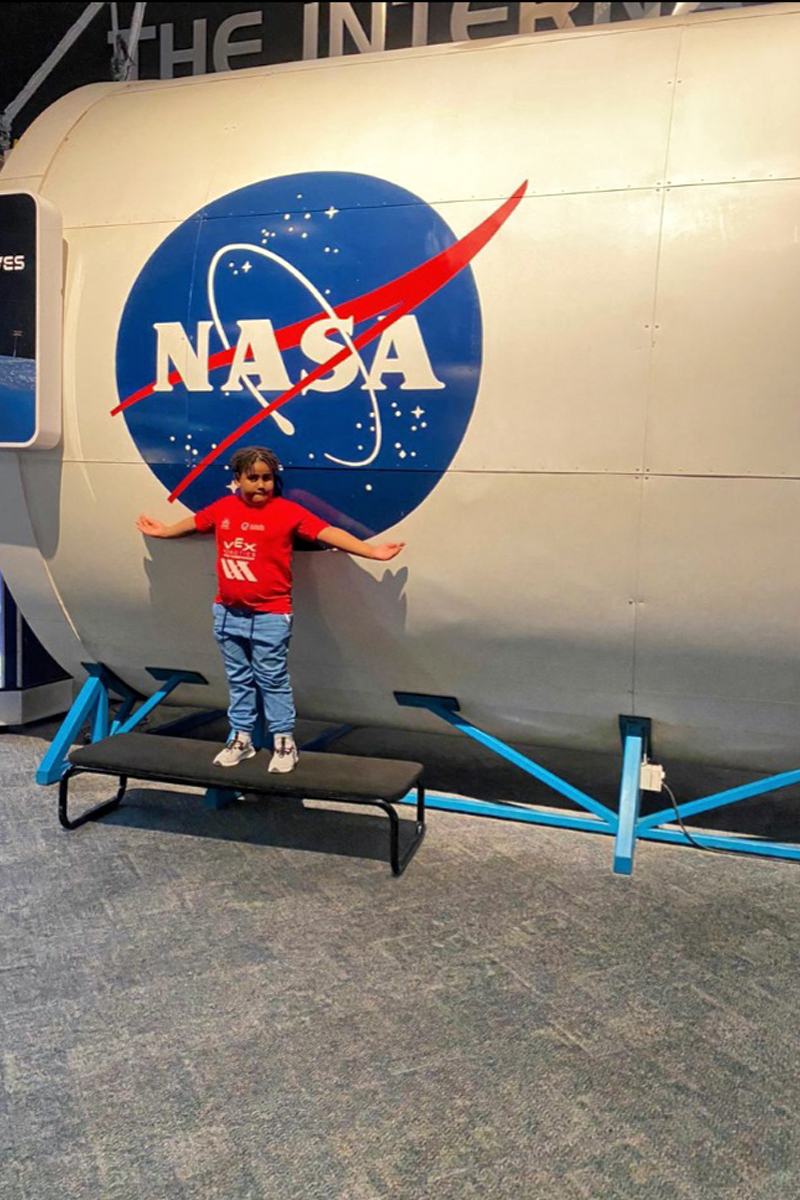
As the world prepares for the Artemis II mission, I keep thinking back to my visit to NASA’s Space Center Houston. That trip changed the way I understand space exploration. Standing there, surrounded by rockets and stories, I finally grasped what it truly took to send humans to the moon.
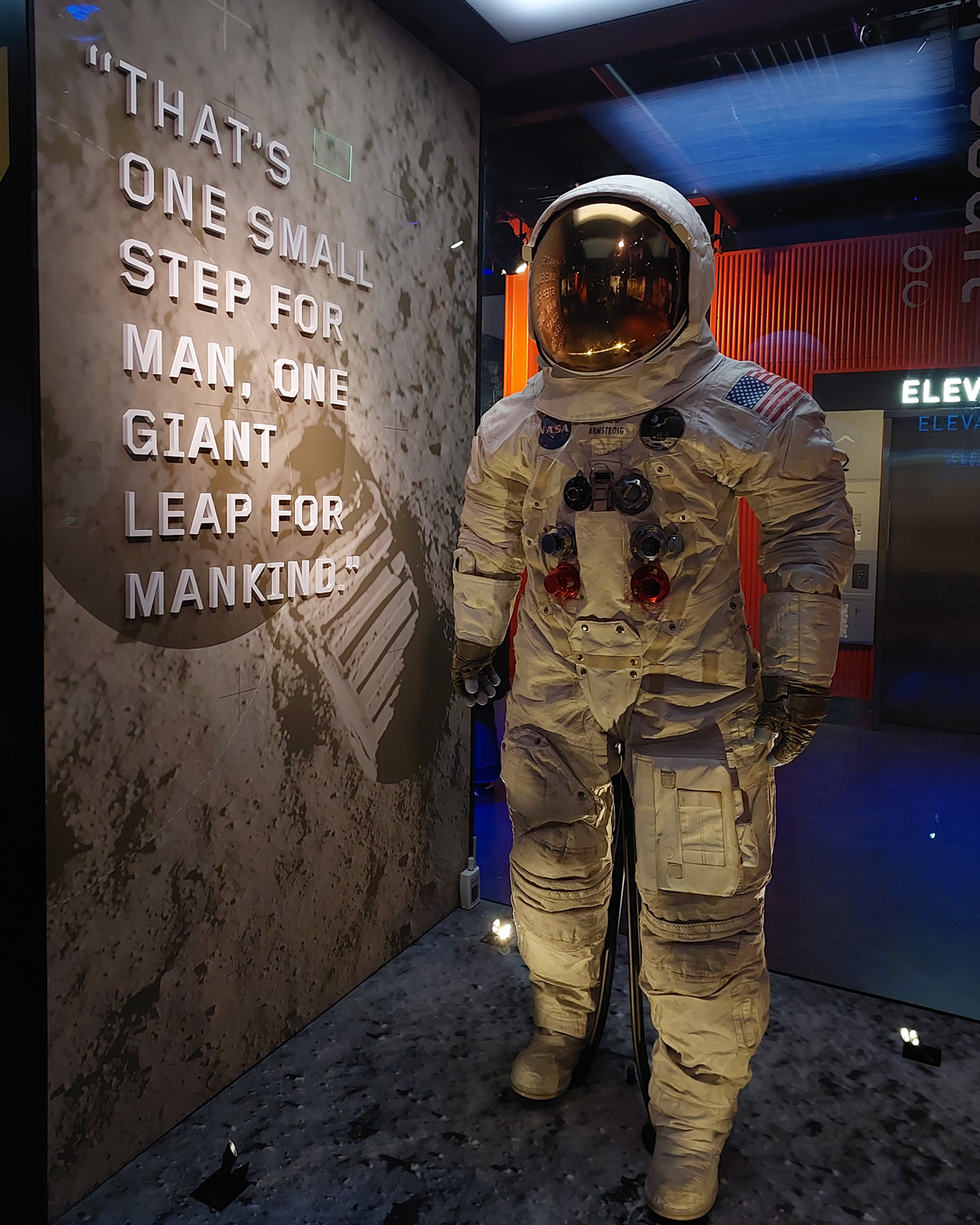
In 1969, Neil Armstrong and Buzz Aldrin made history, but their famous steps were the result of years of quiet, determined work. Before anyone ever walked on the lunar surface, robotic explorers were sent ahead, landing sites were studied, mistakes were made and fixed, and the Apollo spacecraft was tested again and again. Seeing that process laid out at NASA reminded me that breakthroughs are built slowly, by people who refuse to give up when things go wrong.
Seeing the rockets that actually traveled beyond Earth was surreal. I stood there in silence for a moment, acknowledging that the machines I was standing beside had left our planet and changed the course of history.
/ Dreaming Beyond Earth
Walking through NASA’s gates felt like stepping into another reality. It’s the kind of place that makes you feel small and powerful at the same time. I stood under rockets that had touched the moon and realized that the same stars we see over Lake Victoria are the ones scientists here are reaching for. Space belongs to all of us and I want every Ugandan child to know that the universe is open to them too.
/ Inspired by the Science
I spent hours learning about the Mars Rovers and how they survive in such a harsh environment. Every wire, every sensor, every tiny part told a story of patience and human creativity. It made me think about the challenges we face back home and how the same curiosity and problem-solving mindset can help us tackle them. The technology is incredible, yes but what moved me most was the reason behind it: the human need to explore, to understand, and to keep going.
/ Engineering of the Stars
This is where the future is being built. I watched engineers at work on the Artemis missions, the ones that will send the first woman and the next man back to the moon. Standing in mission control, I could feel the echoes of old countdowns mixed with the excitement of what’s coming next. It felt like standing at the edge of tomorrow.
I was also lucky enough to go behind the scenes and see what makes space travel possible. I learned that space suits are basically tiny, person-shaped spaceships, each one carefully designed to keep an astronaut alive in the vacuum of space. The level of precision was unbelievable. It reminded me that whether you’re building a bridge in Kampala or a spacecraft in Texas, every great invention starts with one bold idea and a lot of persistence.